How Long Does It Take to Build a New Home in Perth?
Build times in Perth typically run 12 to 18 months — but the real question is what you do with that time. Here is what to expect, why rushing is risky, and why waiting is even riskier.
One of the first questions people ask when they start thinking about building is: how long is this actually going to take?
It is a fair question — and the honest answer is that it depends. But there is a range you can plan around, some important factors that affect where you land in that range, and a few things worth understanding before you sign a contract.
The General Timeline
For most new homes in Perth, you are looking at somewhere between 12 and 18 months from signing your building contract to receiving your keys.
That timeline breaks down roughly like this:
Pre-construction (2–4 months). Before a single brick is laid, there is a period of approvals, documentation, and preparation. This includes council and building permit approvals, engineering drawings, colour selections, and any site preparation work. This stage often takes longer than buyers expect, and it happens before the visible build even begins.
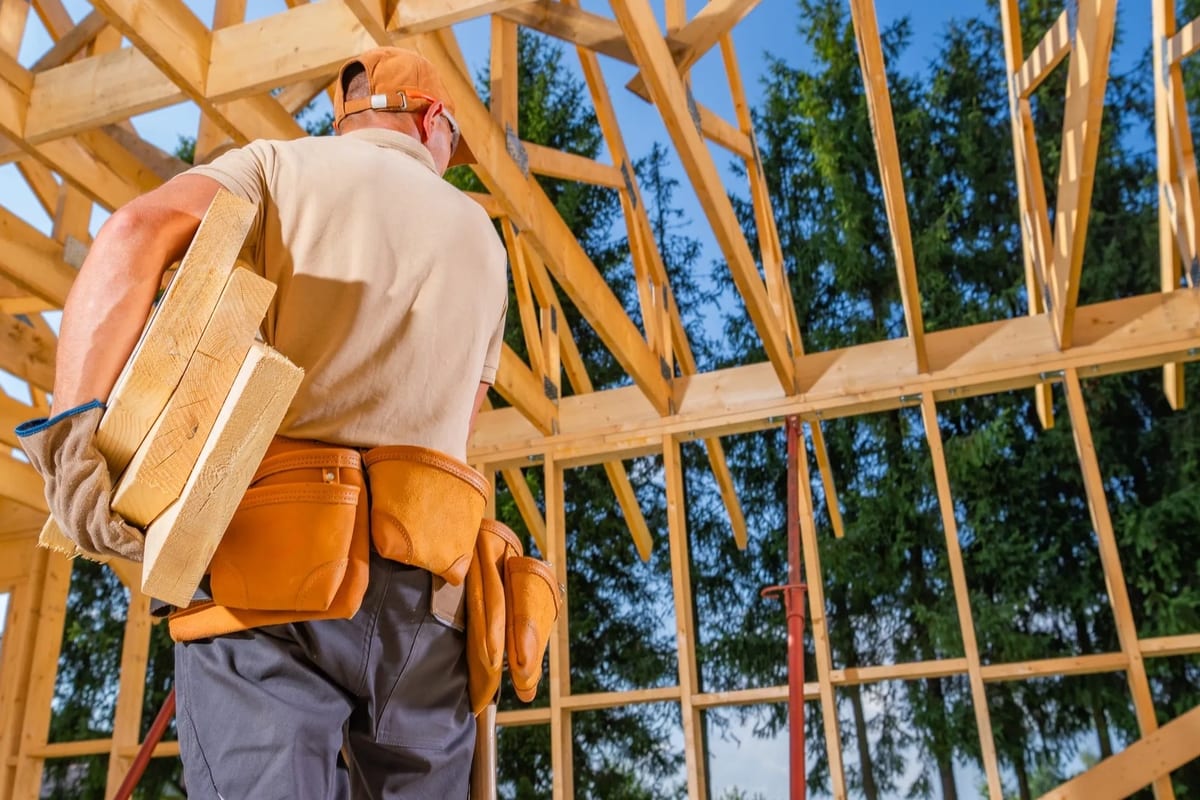
Construction (8–14 months). This is the active build — from slab pour through to practical completion. The length of this stage depends on your construction method, your builder's schedule, trade availability, and weather. More on this below.
Practical completion and settlement (2–4 weeks). Once the build is finished, there is a final inspection, a defects list if needed, and handover. For house-and-land packages, settlement of the land may have already occurred; for separate land and construction, the final draw-down of your construction loan happens here.
Does Construction Type Affect the Timeline?
Yes — and it is worth understanding before you choose a builder.
Double brick is the slowest of the three main construction methods. Bricklayers work at a measured pace, and two skins of brick take considerably longer to lay than erecting a frame. A double brick home will typically sit at the longer end of the construction window.
Brick veneer — a single skin of brick over a timber or steel frame — is faster. The frame goes up in days, and the single skin of brickwork follows. Most brick veneer builds come in at the middle of the range.
Cladded frames are generally the fastest. Once the frame is erected, the cladding goes on quickly, and the build can progress to lock-up and internal fit-out sooner. For buyers who want to minimise the time between signing and moving in, a cladded frame build is often the quickest path.
That said, the difference between methods is rarely the deciding factor on its own. Builder capacity, trade availability, and site conditions can have just as much impact on your actual timeline as the construction method.
Some Builders Offer Build Time Guarantees
A number of volume builders in Perth offer build time guarantees — a contractual commitment to complete your home within a specified number of weeks from the start of construction. If they miss the deadline, there may be compensation provisions in the contract.
These guarantees are worth understanding before you sign. Read the fine print carefully — there are usually exclusions for delays caused by weather, council approvals, or variations you request during the build. A guarantee is only as useful as the conditions attached to it.
If certainty of timeline is important to you, ask your builder directly: do you offer a build time guarantee, and what does it cover?
The Part Nobody Loves Talking About — Paying Rent and a Mortgage at the Same Time
Here is the reality that catches a lot of first home buyers off guard: during the construction period, you will likely be paying both rent and a mortgage.
Not your full mortgage — during construction, you only pay interest on the portion of the loan that has been drawn down so far. As each stage of the build is completed, the builder is paid a progress payment, your loan balance increases, and your repayments go up incrementally. In the early stages, this can be as low as a few hundred dollars a month.
But you will still be paying rent on top of that. For most people, this is manageable — it is a temporary overlap, not a permanent state. The key is to go in with eyes open, budget for it, and not be surprised when the first construction loan statement arrives.
So Why Build at All? Because Waiting Costs You More.
This is the part I want you to really sit with.
Yes, building takes 12 to 18 months. Yes, there will be a period where you are paying rent and watching your new home slowly take shape. It can feel like a long time.
But consider the alternative.
If you decide to wait — to save a bit more, to feel more ready, to see what the market does — you are almost certainly going to be renting for another year. That is another 12 months of paying someone else's mortgage. Another year of your money going out the door with nothing to show for it at the end.
And while you are waiting, land prices in Perth are not standing still. Build costs are not standing still. The home you could have started building today will cost more to build in 12 months. The block you could have secured will be priced higher — if it is still available at all.
The people who got into the market five years ago are not sitting around wishing they had waited longer. They are building equity. Every repayment they make is reducing their loan balance and increasing their ownership stake in an asset that is growing in value.
Getting in sooner — even if the timing feels imperfect — is almost always better than waiting for perfect conditions that never quite arrive.
The Iron Triangle — Why You Cannot Have Everything at Once
There is a concept in project management called the Iron Triangle, sometimes called the Triple Constraint. It applies directly to building a home, and understanding it will save you a lot of frustration.
The three points of the triangle are: time, cost, and quality.
The rule is simple: you can optimise for two of the three, but not all three at once.
- If you want it fast and cheap, you will likely compromise on quality.
- If you want it fast and high quality, it is going to cost more.
- If you want it cheap and high quality, it is going to take longer.
What does this mean in practice?
If you pressure your builder to finish faster than their standard schedule allows, something has to give. Either they bring in more trades at a premium cost — which gets passed on to you — or they cut corners to hit the deadline, which affects the quality of your finished home. Sometimes both.
A builder who agrees to an unrealistic timeline without adjusting the price is not doing you a favour. They are setting up a situation where quality is the variable that gets squeezed.
The best outcome is a realistic timeline agreed upfront, with a builder who has the capacity to deliver it. Rushing a build to save a few weeks rarely ends well.
What This Means for You
Build times are real, and the overlap period of paying rent and a construction loan is real. Go in prepared for both.
But do not let the timeline be the reason you delay. Every month you wait is a month of rent paid, a month of rising land and build costs, and a month of equity you are not building.
The 12 to 18 months it takes to build your home will pass regardless of whether you start now or in a year. The difference is where you end up when it does.
If you want to understand what a realistic timeline looks like for your specific situation — your block, your budget, your construction type — that is exactly the kind of conversation I have with clients every day. Reach out and we can map it out together.
This guide is general information only and is current as at October 2026. Build timelines vary by builder, site conditions, and construction method. Always confirm expected timelines directly with your builder before signing a contract.
Explore Topics
Written by
Ray
Content creator and writer sharing insights and stories.